
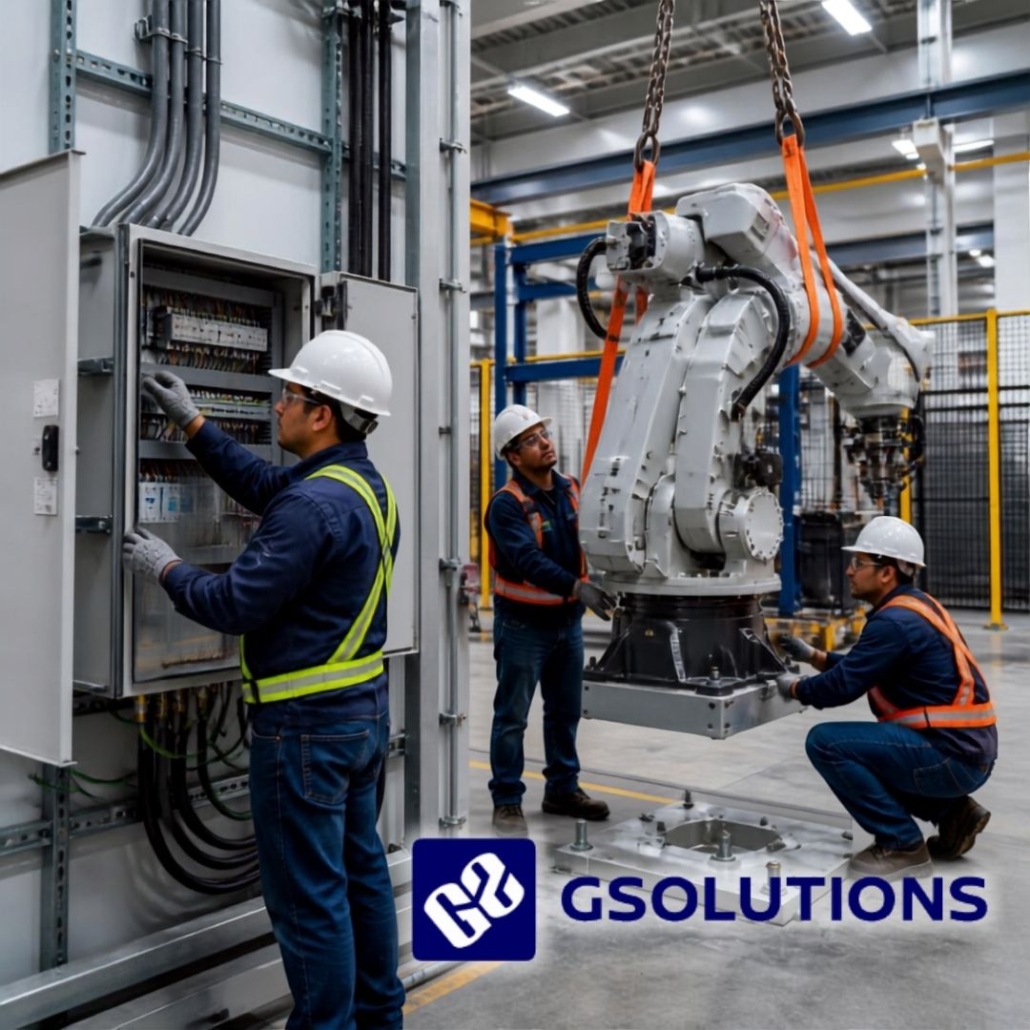
Electrical and Mechanical Installation Readiness for Automotive Production Equipment
Installing new automotive production equipment requires more than placing a machine on the floor and connecting power. Foundations, utilities, mechanical interfaces, electrical distribution, controls, safety systems, material flow, and commissioning activities must all be ready in the correct sequence. Automotive equipment installation readiness determines whether the project moves smoothly into production or becomes a series of last-minute modifications.
Site Readiness Begins Before Delivery
Technical teams should verify the installation area before the equipment arrives:
- Floor condition, anchoring points, elevations, and load capacity
- Access routes for unloading, rigging, and assembly
- Electrical voltage, capacity, disconnects, grounding, and panel locations
- Compressed air, water, gas, exhaust, cooling, or other required utilities
- Network connections and control-system integration points
- Safety clearances, guarding zones, pedestrian routes, and maintenance access
Mechanical Assembly and Electrical Installation Are Interdependent
Mechanical position affects cable length, sensor location, conduit routing, guarding, and access. Electrical decisions affect where equipment can be serviced and how safely it can be isolated. Installation plans should therefore be reviewed jointly by mechanical and electrical teams rather than completed in separate sequences with limited coordination.
Controls Integration Must Be Defined Early
New equipment may need to exchange signals with upstream and downstream machines, plant PLCs, robots, safety systems, traceability databases, or production-management platforms. Undefined communication requirements often appear late during commissioning, when changing hardware or logic becomes more disruptive.
Commissioning Is a Technical Phase, Not a Final Checkbox
Commissioning should verify individual devices, manual motions, safety circuits, interlocks, sequences, alarms, recipes, cycle performance, and recovery procedures. It should also include operators and maintenance personnel so the handoff reflects real operating conditions rather than only an engineering test.
Documentation Supports the Life of the Equipment
Updated drawings, backups, device lists, spare-parts information, manuals, settings, and acceptance records become essential after the installation team leaves. Accurate documentation reduces future troubleshooting time and helps maintenance teams preserve the intended configuration.

