
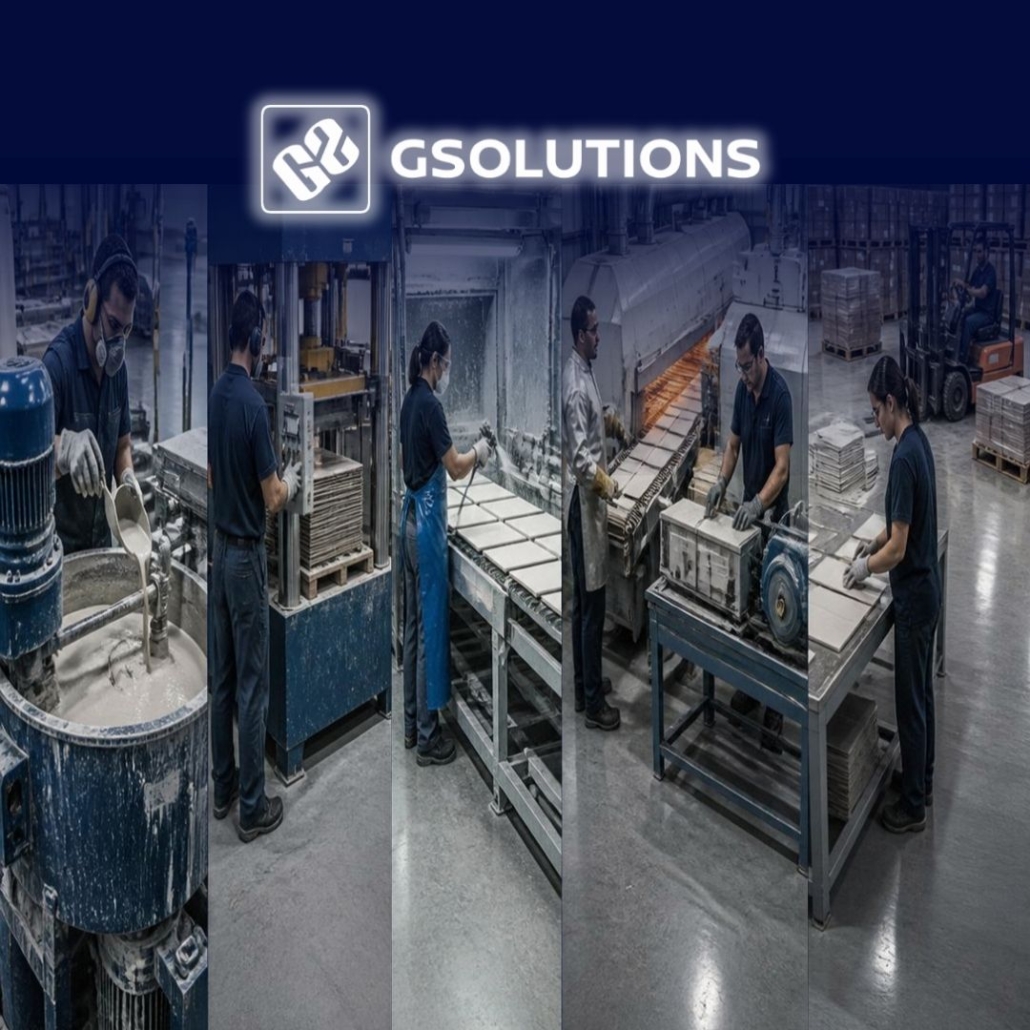
From Glazing to Sorting: Where Technical Staffing Matters Most in Ceramic Production
A ceramic plant may appear highly automated, but every production stage still depends on people who understand the process, recognize abnormal conditions, and respond correctly when equipment or product behavior changes. Technical staffing across the ceramic production line requires more than filling a shift roster. Different stages demand different combinations of process knowledge, machine familiarity, quality awareness, and technical support.
Body Preparation
Personnel working in body preparation monitor material flow, dosing, mixing, milling, moisture, storage, and transfer. Their decisions influence the consistency of everything that follows. Equipment operation and product preparation cannot be separated at this stage.
Press Operation
Press operators need to understand cycle behavior, feeding, tooling condition, pressure stability, alarms, and product appearance. Electromechanical support is important because hydraulic, mechanical, electrical, and control issues can produce similar symptoms.
Glazing
Glazing personnel manage application consistency, line speed, cleaning, material condition, spray or disc systems, and surface inspection. Small variations can become highly visible after firing, so attention and rapid adjustment are essential.
Kiln Operation
Kiln operators oversee a long, continuous thermal process. They interpret trends, alarms, firing conditions, product movement, and quality feedback. Maintenance technicians and PLC specialists may be required when temperature, airflow, drives, or control sequences become unstable.
Squaring and Sorting
At the end of the line, squaring and sorting combine mechanical precision, sensors, vision systems, handling equipment, and human quality judgment. Personnel must understand dimensions, surface classifications, calibration, packaging criteria, and the consequences of allowing defects or incorrect grades to continue.
Warehouse Operations
Warehouse staff protect traceability, product identification, safe handling, inventory accuracy, and loading flow. A finished product can still be damaged, mixed, delayed, or misidentified after manufacturing is complete.
Staffing Must Reflect the Process
Assigning personnel only by generic job title overlooks the knowledge each stage requires. Effective staffing evaluates the exact equipment, process, shift, product, quality criteria, and support available. That alignment reduces learning time and improves the ability of teams to contribute safely from the beginning.

