
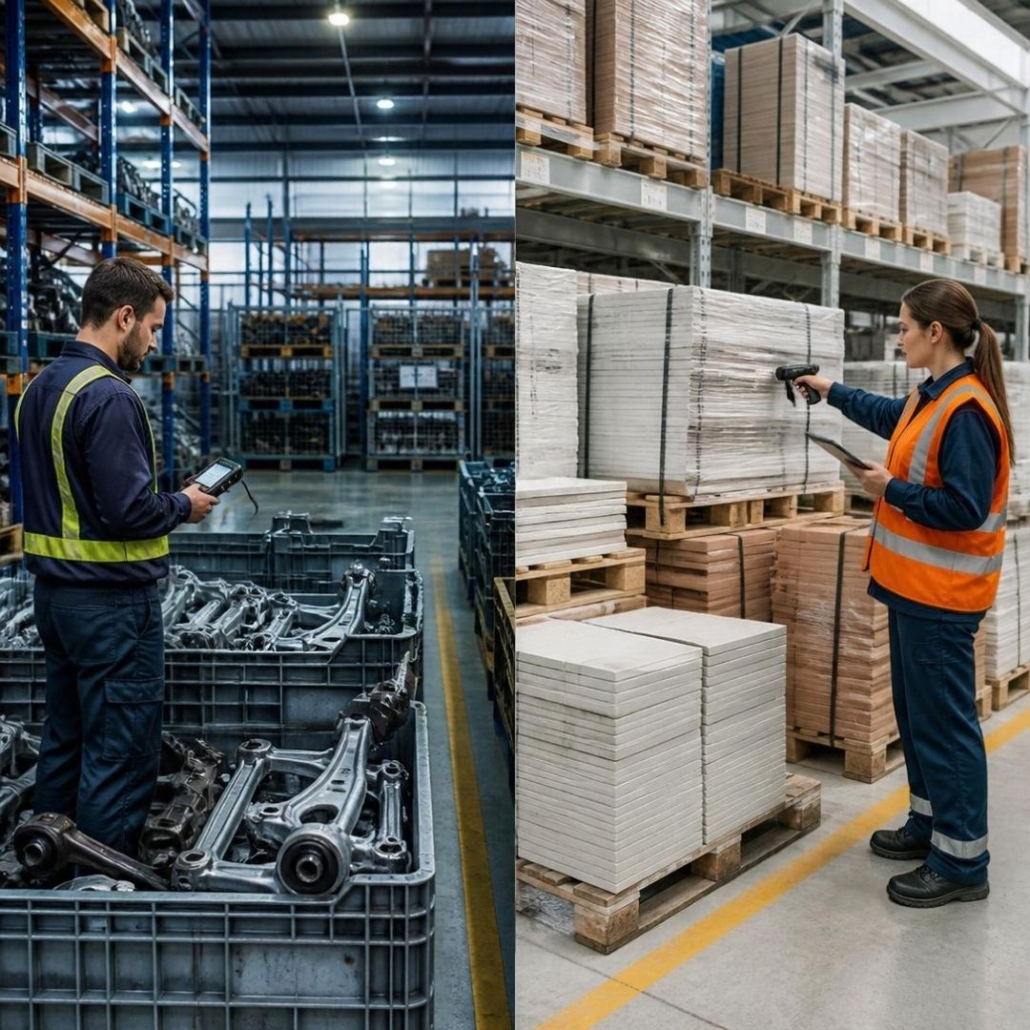
Industrial Warehouse Operations: Protecting Traceability and Production Flow
Warehouse operations are often discussed as a logistics function separate from manufacturing. In practice, the warehouse directly influences whether production receives the correct material at the correct time and whether finished products remain identifiable, protected, and ready for shipment. Strong industrial warehouse operations and traceability support both automotive and ceramic plants from incoming material through final delivery.
The Warehouse Connects Multiple Production Risks
- Material availability: Missing or incorrectly located components can stop a production sequence even when every machine is available.
- Traceability: Lot, batch, part, model, grade, and status information must remain accurate through every movement.
- Quality control: Accepted, rejected, quarantined, and rework material must be clearly separated.
- Safe handling: Automotive components and ceramic finished goods have different damage risks, packaging requirements, and lifting methods.
- Inventory accuracy: System quantities must match physical material so planners can make reliable production decisions.
Automotive Warehouses Depend on Sequence and Identification
Automotive operations may require parts to reach the line in a specific order, container, orientation, or production window. A correct part delivered late—or an incorrect variant delivered on time—can create the same disruption. Warehouse assistants and material handlers need to understand labels, part numbers, routes, replenishment rules, and escalation procedures.
Ceramic Warehouses Protect Finished Quality
Ceramic products must remain organized by model, shade, caliber, grade, lot, and packaging condition. Incorrect mixing can create customer claims even when the manufacturing process produced acceptable material. Handling practices also matter because finished pieces can chip, crack, or suffer packaging damage after leaving the line.
Industrial Cleaning Supports Warehouse Control
Clean, organized aisles and storage areas improve safety, visibility, inventory accuracy, and material movement. Industrial cleaning is not cosmetic in a high-activity warehouse; it reduces obstructions, contamination, damage risk, and the time workers spend searching or maneuvering around avoidable conditions.
Staffing Quality Influences System Quality
Digital inventory systems depend on accurate human execution. Scanning the wrong location, bypassing a label, or moving material without recording it creates data that appears correct but no longer represents reality. Training and consistent procedures are therefore as important as the warehouse software itself.

