
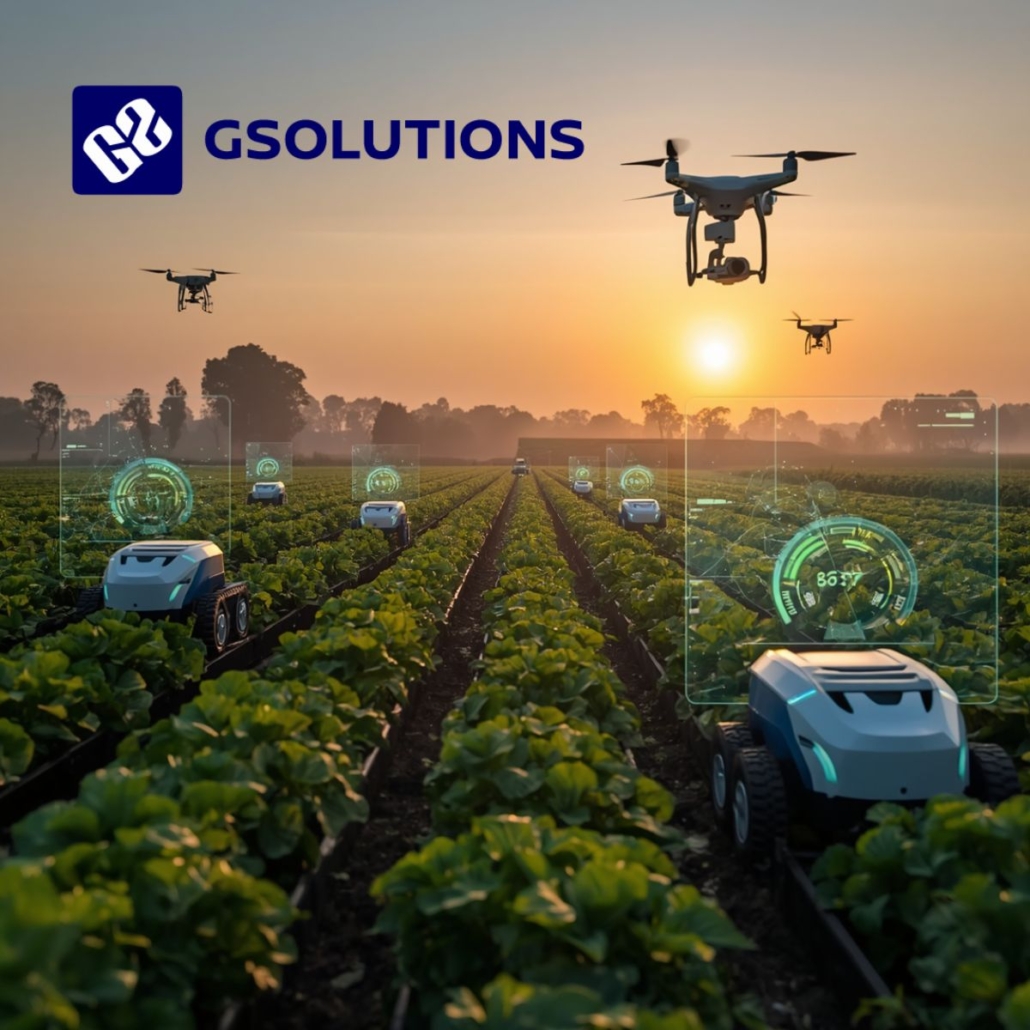
Robots in Agriculture: The Rise of Autonomous Farming
Agriculture is becoming one of the fastest-growing sectors for robotics adoption worldwide. According to the International Federation of Robotics, autonomous agricultural systems are among the top global robotics trends for 2025, driven by labor shortages, sustainability goals, and the need for higher efficiency.
Countries such as Japan, the Netherlands, Israel, and the United States are leading the development of intelligent farming technologies. What makes this shift remarkable is that agriculture was historically considered too unpredictable for automation. Weather conditions, irregular terrains, and crop variability limited robotic implementation for years.
Today, AI-powered robots equipped with advanced computer vision and machine learning are changing that reality. Modern agricultural robots can analyze crop health, detect diseases early, optimize irrigation, and perform selective harvesting with impressive precision. According to Robotics Business Review, AI integration is allowing agricultural robots to become increasingly adaptive rather than task-specific.
Another major innovation is the use of digital twins and simulation environments before deployment. IEEE Spectrum has highlighted how robotics companies are training autonomous systems in virtual environments to reduce risk and improve operational performance in real-world farms.
Programming frameworks are evolving as well. ROS2, Python, edge AI systems, and reinforcement learning are becoming standard tools for modern robotics developers. Instead of relying only on rigid programming logic, robots are beginning to learn behaviors dynamically through data-driven models.
This transformation represents far more than automation. It marks the beginning of intelligent agricultural ecosystems capable of improving food production while reducing environmental impact.
Sources
- International Federation of Robotics (IFR)
- Robotics Business Review
- IEEE Spectrum

