
Kiln Reliability in Ceramic Manufacturing: The Maintenance Factors That Protect Product Quality
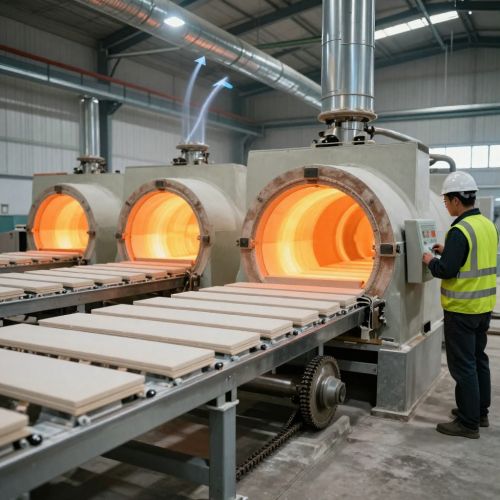
The kiln is one of the most consequential assets in ceramic manufacturing. It combines heat, airflow, motion, combustion, instrumentation, and precise process control over an extended production path. When any of those systems becomes unstable, the effects may appear as temperature variation, color differences, deformation, cracking, incomplete firing, or an interruption that affects a large volume of material already inside the process. That makes ceramic kiln maintenance and reliability central to both production continuity and final quality.
A Kiln Is a System, Not a Single Machine
Reliable kiln operation depends on multiple technical disciplines working together:
- Combustion components: Burners, valves, regulators, ignition systems, and fuel-delivery components must operate consistently.
- Airflow systems: Fans, dampers, ducts, filters, and exhaust systems influence temperature distribution and atmosphere.
- Mechanical movement: Rollers, bearings, drives, gearboxes, and alignment affect product travel and residence time.
- Electrical systems: Motors, panels, wiring, contactors, protection devices, and power quality support continuous operation.
- Instrumentation and controls: Thermocouples, pressure devices, sensors, PLC logic, and operator interfaces regulate the firing curve.
Small Deviations Can Create Large Quality Effects
A sensor that slowly loses accuracy may not trigger an immediate alarm, but it can shift process decisions. A worn bearing can alter roller movement before it fails completely. Restricted airflow can create uneven thermal conditions. These are examples of deterioration that may first appear in product quality rather than as an obvious equipment breakdown.
For that reason, kiln maintenance should connect technical inspections with production information. Repeated defects, localized quality changes, unusual energy consumption, or longer stabilization times can all indicate equipment conditions that deserve investigation.
Planned Inspections Reduce High-Pressure Repairs
Corrective work around a hot, production-critical kiln is more complicated than planned intervention. Access may be limited, temperatures may extend recovery time, and a rushed repair can introduce additional risk. Planned inspections allow teams to verify component condition, prepare replacement parts, coordinate technical disciplines, and complete work during a controlled production window.
Controls and Mechanical Condition Must Be Reviewed Together
Modern kilns rely heavily on PLCs and instrumentation, but a control adjustment cannot correct every physical problem. Changing a setpoint may temporarily mask restricted airflow, mechanical wear, or a deteriorating burner. The most reliable troubleshooting combines control-system data with direct mechanical and electrical inspection.

