
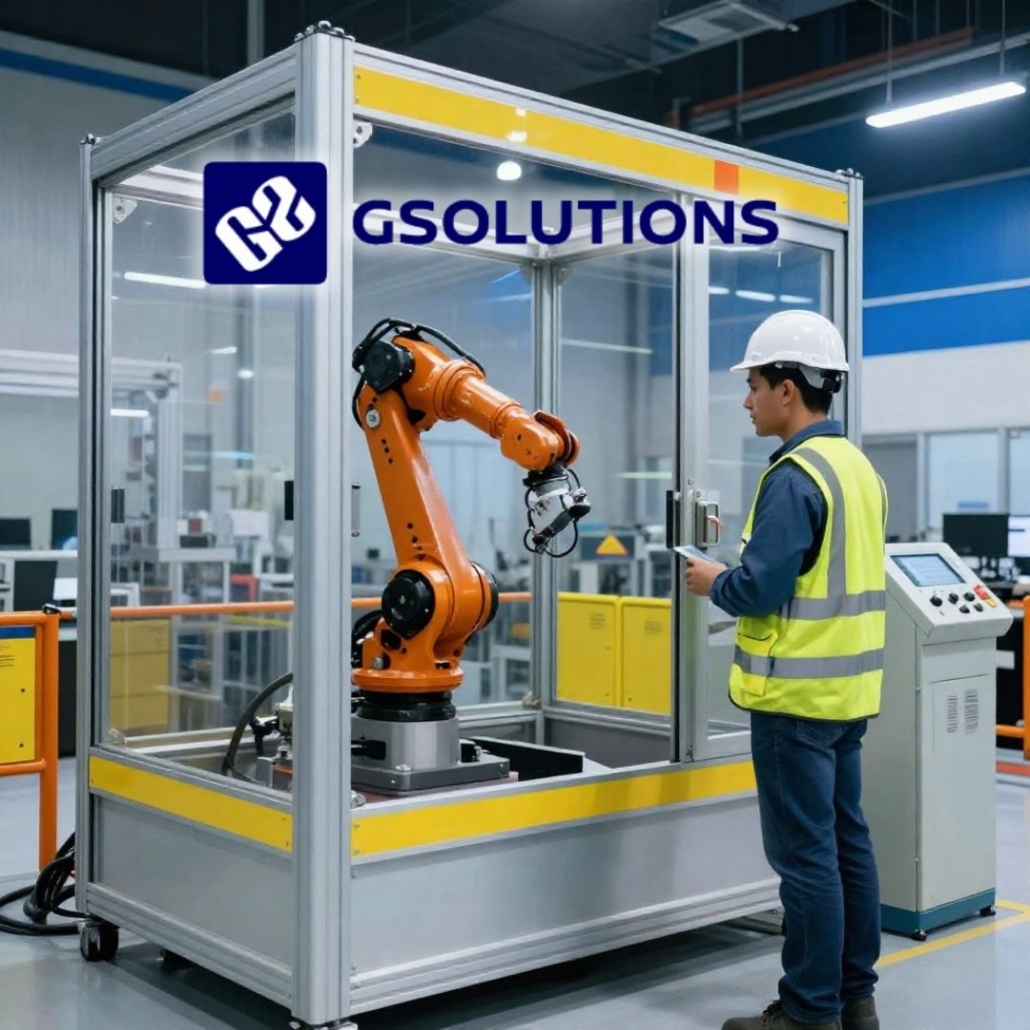
Robotic Cells and the Future of Manufacturing Operations
Across the automotive and ceramic manufacturing sectors, robotic cell implementation in manufacturing is no longer reserved for large-scale operations with dedicated engineering departments. In 2026, mid-size and growing manufacturers are deploying robotic cells for welding, assembly, material handling, and quality inspection and the market for turnkey robotic cell solutions is growing at a 12.6% annual rate, projected to reach $7.41 billion this year alone.
The question for operations managers is not whether to automate. It is how to do it without disrupting production, overrunning budget, or finding yourself with a robotic cell that no one on your team can properly maintain.
What a Turnkey Robotic Cell Actually Involves
A turnkey robotic cell project goes well beyond purchasing a robot. It encompasses:
- Design: Engineering the cell layout for the specific production task, workspace constraints, and safety requirements
- Manufacture: Fabricating the structural components, safety enclosures, fixturing, and integration hardware
- Assembly and installation: Mechanical and electrical installation, fieldbus wiring, and system integration
- Programming and commissioning: PLC configuration, robot programming, process parameter setup, and acceptance testing
- Operational handoff: Training the production team that will operate and maintain the cell on an ongoing basis
A standard single-station robotic cell typically requires 9 – 15 working days for mechanical installation, wiring, and commissioning. Multi-station cells with coordinated motion and vision systems can take 4–8 weeks. Every phase requires specific technical expertise and gaps in that expertise translate directly into delays and rework.
The Workforce Behind the Robotics Investment
The manufacturers extracting full value from their robotic cell investments share a common characteristic: they planned the workforce alongside the technology. That means having qualified PLC programmers available during commissioning, trained electromechanical technicians for ongoing maintenance, and production operators who understand how to work efficiently with the automated system rather than around it.
When that workforce is not in place, robotic cells underperform. Programming takes longer. Faults are not caught early. Preventive maintenance falls behind. The ROI calculation that justified the investment stretches further into the future.
From Design to Daily Operations
Whether you are designing a new robotic cell from scratch, integrating one into an existing production line, or bringing in specialized PLC and robotics programmers to support an existing installation, having a technical partner who understands both the project and the ongoing workforce requirements is what keeps the cell running as designed.

