
How Technical Staffing Keeps Your Automation Projects on Schedule
Automation projects in manufacturing have a well-documented failure pattern: the equipment arrives, the installation begins, and then everything slows down not because of a technical problem, but because the qualified personnel to support the deployment are not in place. Technical staffing for industrial automation is one of the most underplanned elements of any capital project, and one of the most expensive to ignore.
The Staffing Bottleneck No One Budgets For
A production facility can source and receive new robotic cells, conveyor systems, or automated assembly equipment within predictable lead times. What is harder to predict is how long it will take to find a PLC programmer who has worked with that specific platform, or an electromechanical technician experienced with the electrical and mechanical installation requirements the new system demands.
In a tight labor market, that search can take weeks and every week of delay between installation and operational readiness has a direct cost in idle capacity, deferred revenue, and project overrun.
Technical Staffing Across the Full Project Lifecycle
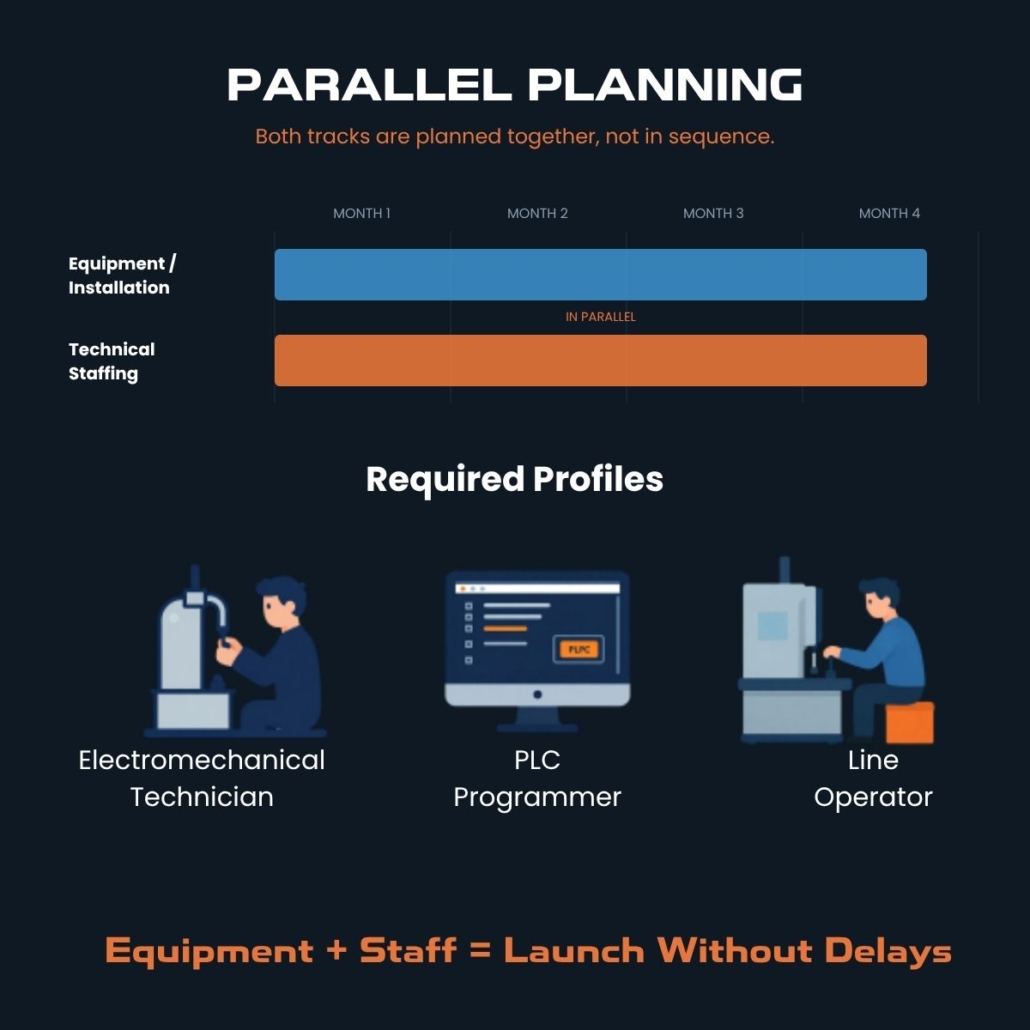
The most effective manufacturers treat staffing as a parallel workstream to the technical project, not an afterthought that starts when the equipment arrives:
- Pre-installation phase: Identify the specific technical competencies the project requires electrical installation, PLC configuration, mechanical assembly, robotics commissioning and begin sourcing before the equipment reaches the floor.
- Installation and commissioning: Provide the hands-on technical professionals electricians, mechanical technicians, PLC specialists needed to execute the installation correctly and on schedule.
- Go-live and ramp-up: Staff the production line with qualified operators and support technicians who can manage the new system from the first day of operation.
- Steady-state operations: Maintain the maintenance and technical support staff the new installation requires on an ongoing basis.
Turnkey Projects and the People Behind Them
For manufacturers pursuing turnkey automation solutions including robotic cell design, manufacture, and assembly the technical workforce requirement extends beyond staffing the line. It includes the engineering and installation teams who execute the project itself. A technical services partner who can provide both the project execution and the ongoing operational staffing is a significant operational advantage.
The Timeline Cost of Getting This Wrong
A production expansion that should take 90 days can stretch to 180 when the workforce side is not planned alongside the technology side. That delay is not an abstract project management problem it is delayed production, delayed customer deliveries, and a competitor who was faster to ramp.

