
The Manufacturing Skills Gap: What It Means for Your Production Line in 2026
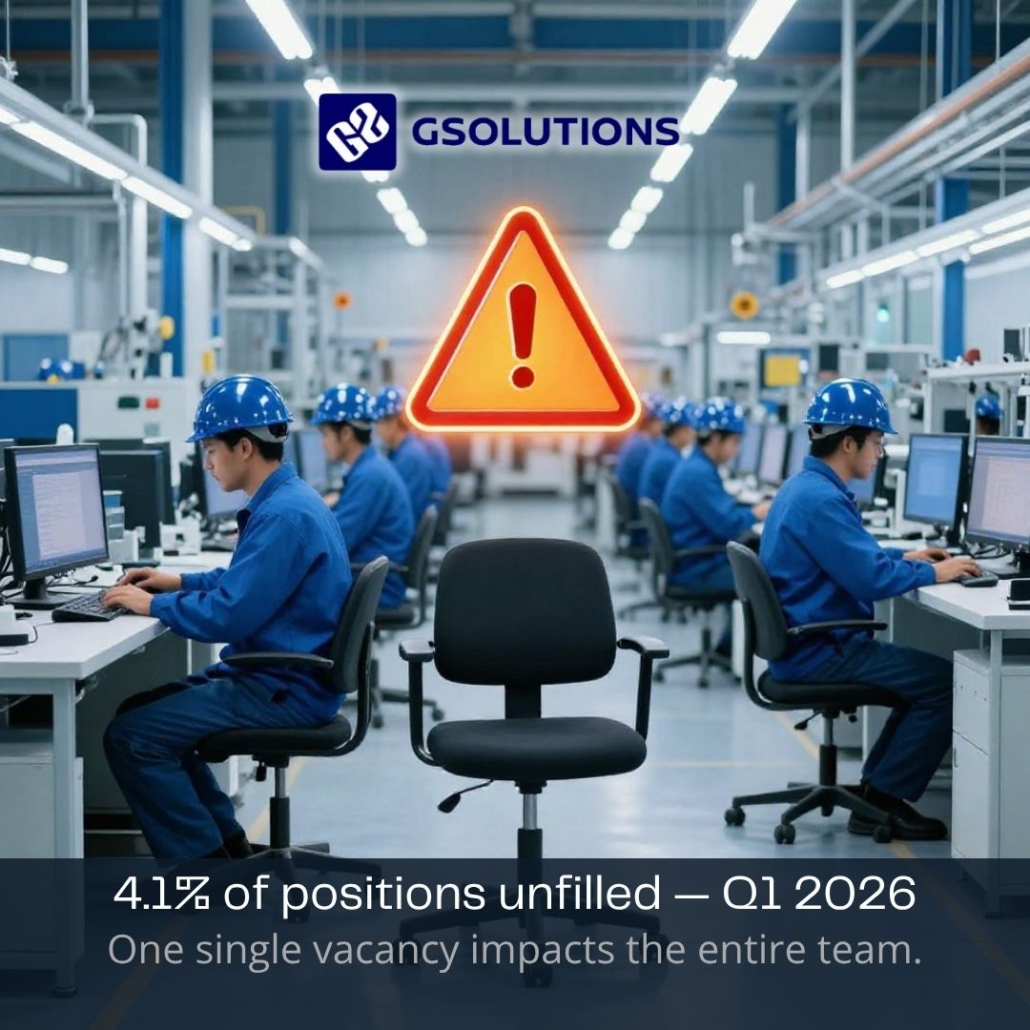
The manufacturing skills gap is not a future projection anymore. It is a present-day operational problem. In Q1 2026, the average U.S. manufacturer had 4.1% of positions unfilled, with one in four companies reporting vacancy rates above 5%. Across the industry, the roles hardest to fill are exactly the ones production depends on most: electromechanical technicians, maintenance specialists, production operators, and professionals with PLC or robotics expertise.
Why the Gap Exists — and Why It’s Not Going Away
Several structural forces are converging at once:
- Retirement wave: Roughly one third of the current industrial maintenance workforce is over 55. As experienced technicians leave, they take decades of hands-on knowledge with them — knowledge that is not automatically transferred to the next person on the floor.
- Technology outpacing training: Modern production lines — from PLC-controlled ceramic kilns to robotics-integrated automotive assembly — require skill sets that traditional trade programs have not kept pace with. The technology is ready. The pipeline of people trained to work with it is not.
- Geographic mismatches: In high-growth manufacturing states like Texas, Oklahoma, Tennessee, and Kentucky, localized demand for skilled trades is outpacing the available labor pool, even when national unemployment figures look stable.
Where Manufacturers Feel It Most
The skills gap does not affect all roles equally. The positions under the most pressure in 2026 are:
- Maintenance technicians (preventive and corrective)
- Electromechanical specialists for production line support
- PLC programmers and automation technicians
- Production operators for specialized processes (kiln operation, glazing, press operation, body preparation)
When one of these positions stays open, the work does not disappear — it shifts to the remaining team. Preventive maintenance gets delayed. Corrective interventions happen under pressure. Quality risks increase. The compounding effect of a single unfilled technical role is consistently underestimated until it becomes a visible production problem.
What the Most Effective Manufacturers Are Doing
The companies managing this challenge best are not waiting for the right candidate to apply through a job board. They are working with industrial staffing partners who maintain active pipelines of pre-qualified technical professionals — so when a position opens, the response is measured in days, not months.
That speed of response is the real competitive advantage the skills gap creates: manufacturers with reliable staffing access recover faster and lose less production time than those without it.
Schedule a consultation with Gsolutions to assess your open technical positions and connect with qualified professionals ready to work in your facility.

